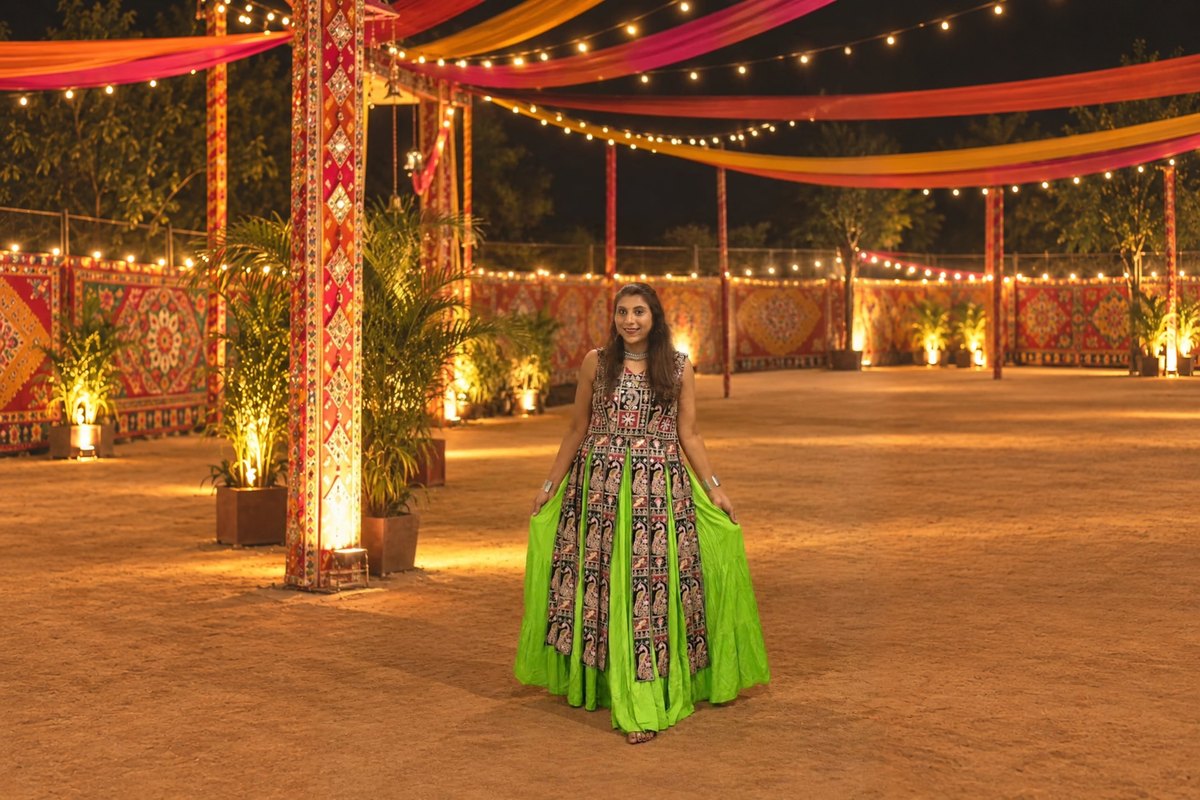
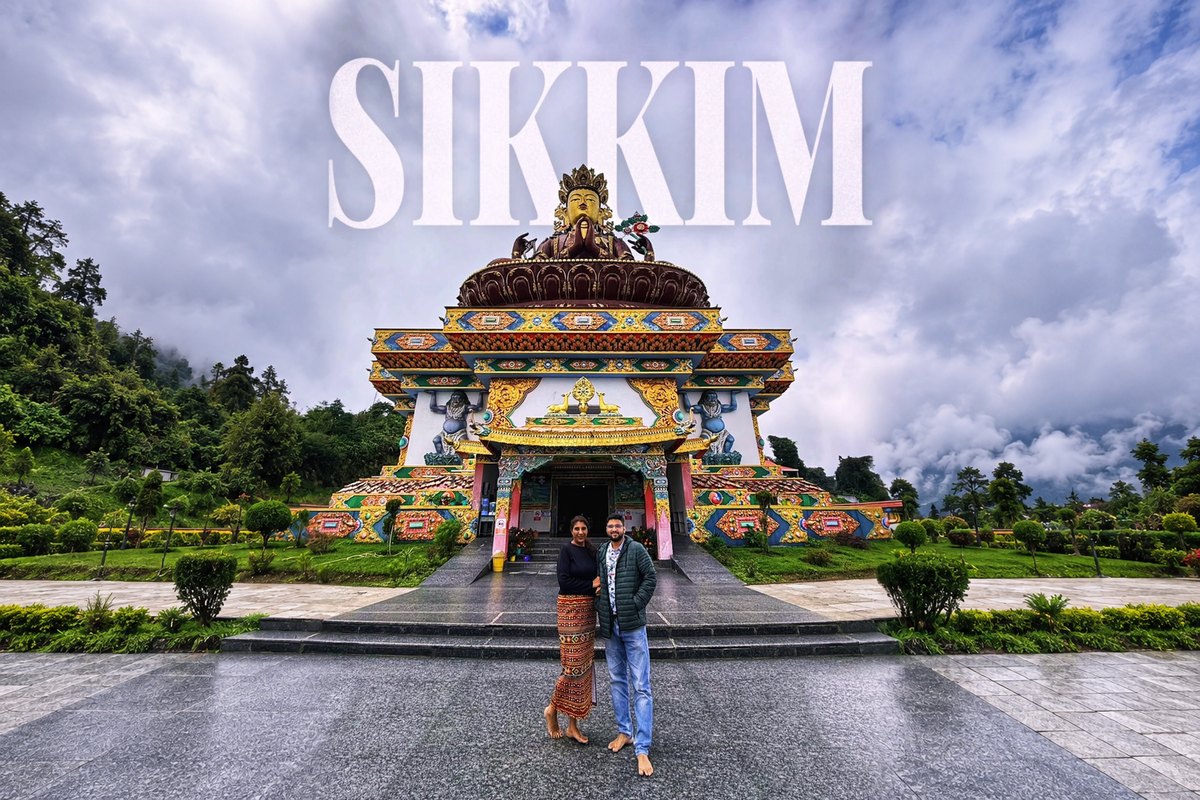
Eleven days in the state I'm from
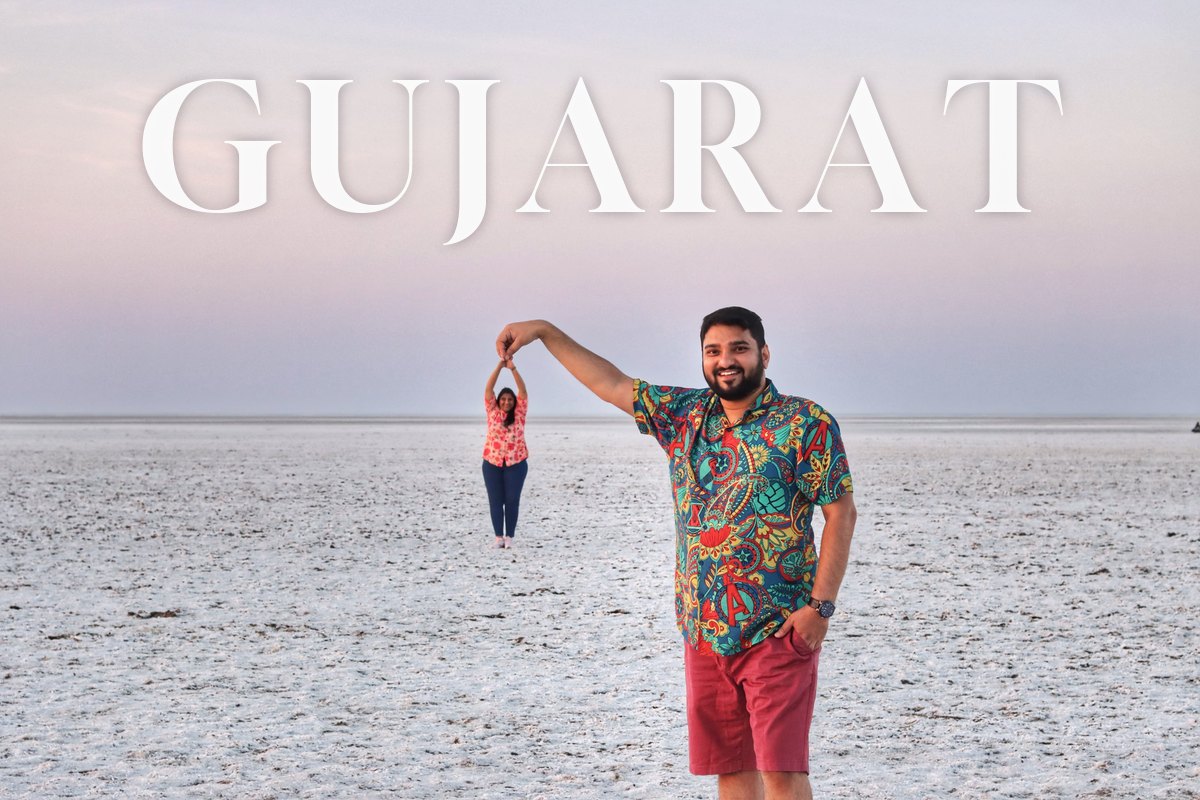
I am Gujarati, and I had never explored Gujarat.
I grew up on my grandparents' stories of it. I had been once, for a wedding and all the family rituals that come with one. That was it. So this year Shriram put his foot down: it's your roots, let's go and see them properly.
Eleven days, one car, and a state I had been claiming all my life without ever really looking at it.
Kevadia
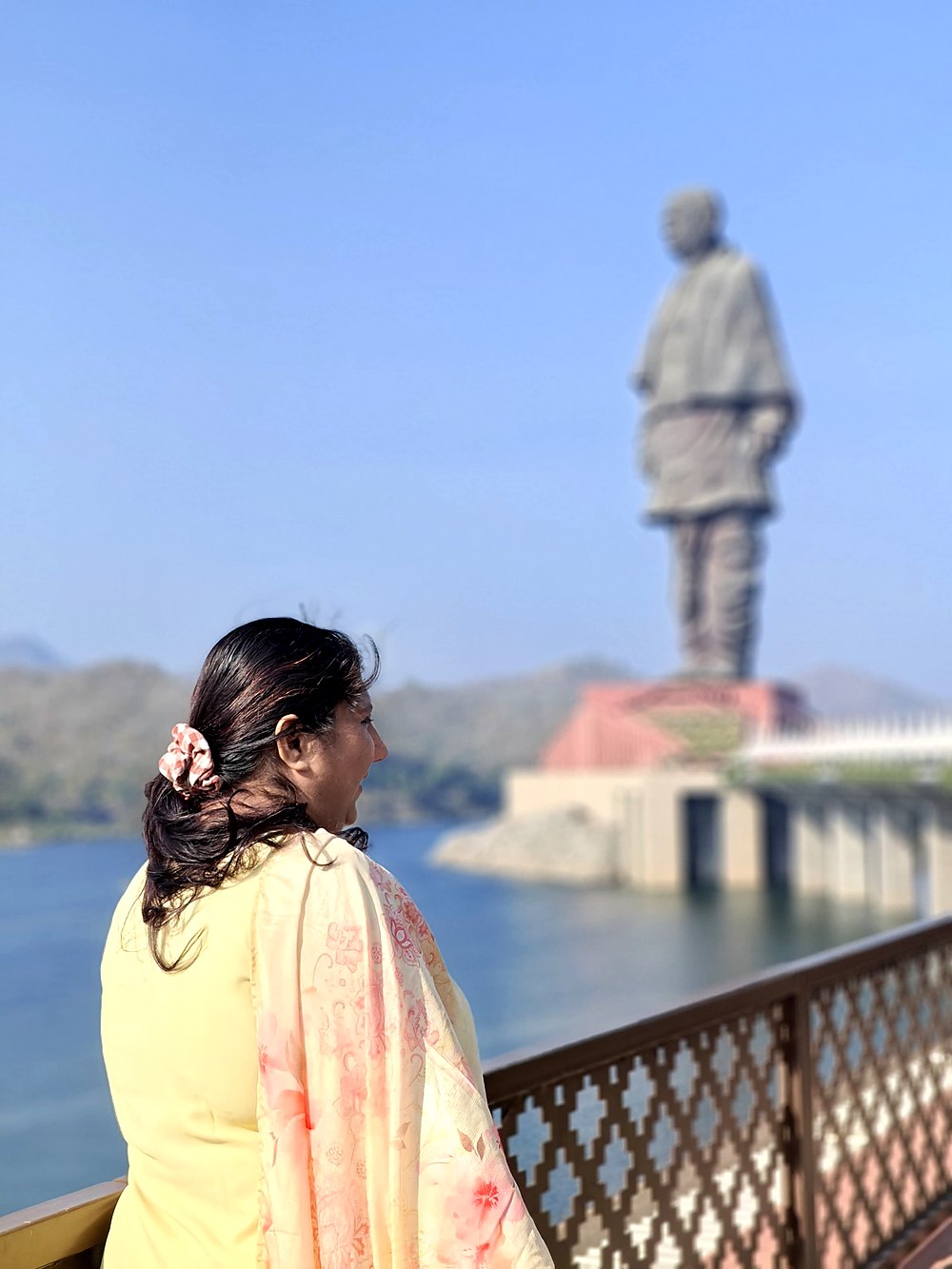
The Statue of Unity is the tallest statue in the world, 182 metres, and that number means nothing until you are at its base, trying to find the top.
A lift takes you up to the viewing gallery at chest height. From there it's the Narmada, the Sardar Sarovar Dam, and the Satpura and Vindhya ranges on either side. In the evening, a light and sound show tells Sardar Patel's story on the statue itself. It ends with the national anthem, with the man who stitched the country together towering above you.
Ahmedabad
Ahmedabad was India's first UNESCO World Heritage City, and the heritage walk through the old pols shows you why: lanes so narrow two people can barely pass, carved wooden balconies, temples tucked into corners. A city that has been living in the same houses for centuries.
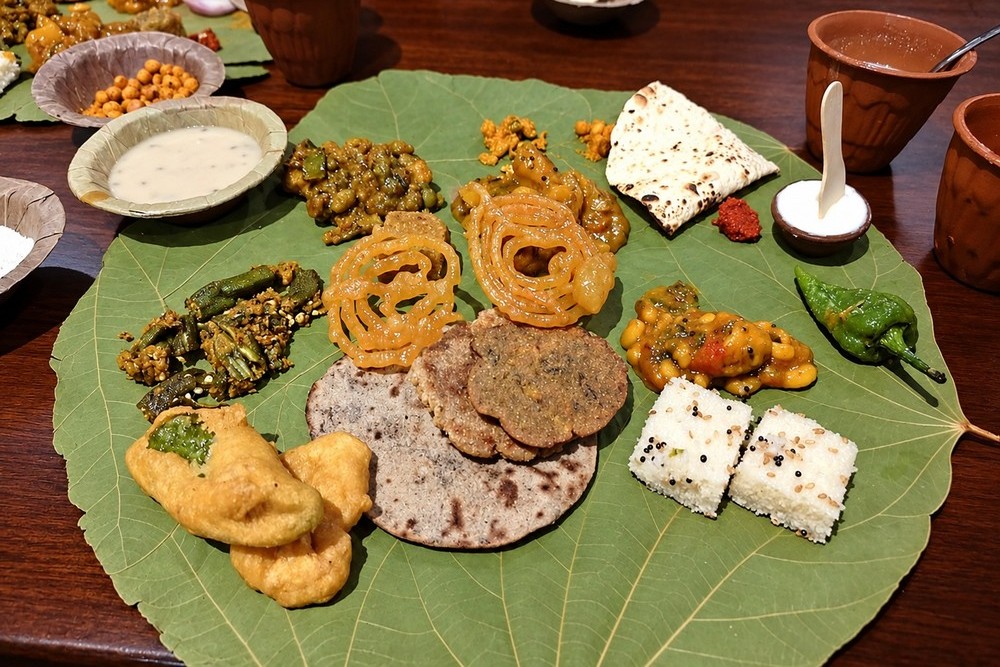
By the end of it we had earned lunch, and lunch was the point. This was the Gujarat I grew up eating, and I wanted my husband to taste it the way it is meant to be, not the way it gets ordered in Bengaluru. A proper thali: dal that is sweet because it is supposed to be, undhiyu, bajra rotla with gud and ghee, sev tameta, khandvi, and shrikhand at the end.
Yes, there is sweetness in Gujarati food. It isn't dessert, it's balance. I enjoyed watching him work that out, one katori at a time.
Dinner at Vishala was the same food with the setting turned all the way up: leaf plates, lanterns and folk music.
Modhera and Patan
This is the old Gujarat. The Sun Temple at Modhera was built almost a thousand years ago, and its carvings are still sharp.
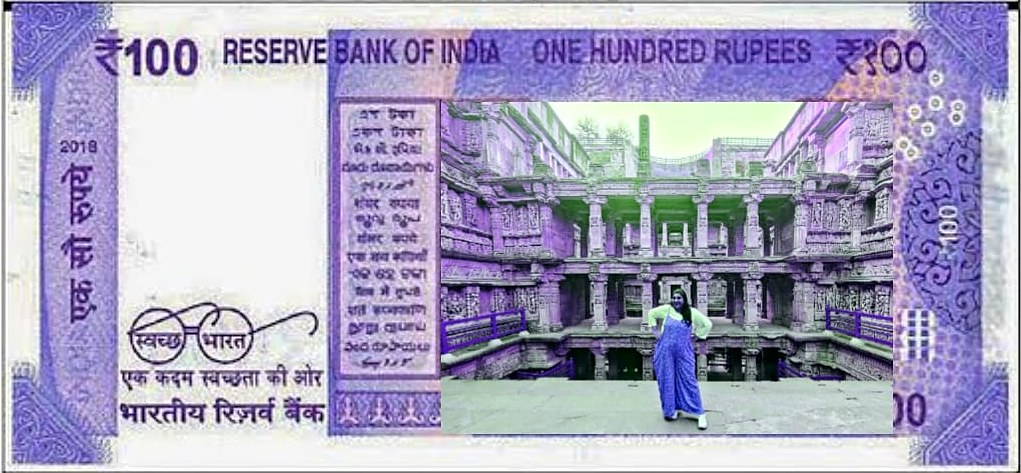
Rani ki Vav, the queen's stepwell in Patan, is the one on the back of the hundred rupee note. Being inside it, after years of seeing it in my wallet, was strange and wonderful. So of course I put myself on the note.
In Patan we also found the Patola weavers. One saree takes months, and the pattern is dyed into the threads before a single line is woven. There is no fixing a mistake later. I thought about that for a long time.
The Rann of Kutch
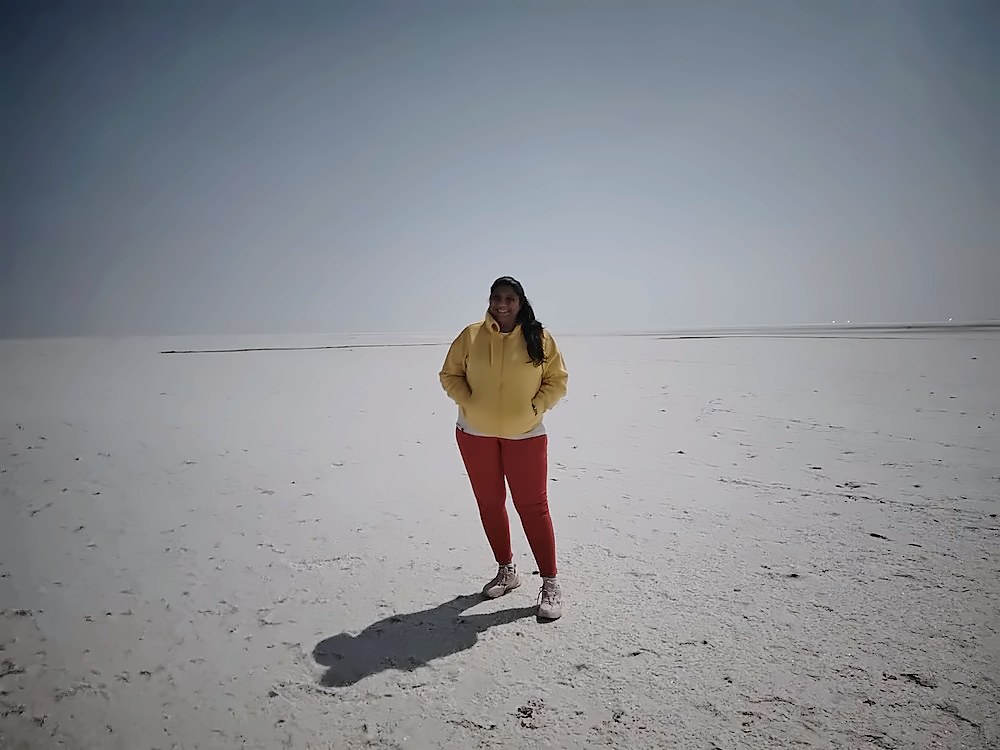
The Rann got two nights, and it needed them.
The drive in is water on one side and salt on the other. The tent city stands only for the season and is then packed away. On Poornima we lay down on the White Rann. No horizon, no sound, no light needed. The salt was bright on its own.
Bhuj
We were at Smritivan, the earthquake memorial and museum, on 26 January. The 2001 earthquake struck on that same date, on the morning of Republic Day. Nobody planned that. Everyone in the room felt it.
Dwarka
Jai Shri Krishna is how Gujaratis greet each other, and Dwarka is Shri Krishna's city. It is also one of the four dhams.
Here, Krishna is not a story you are told. Krishna is a feeling. It begins long before the darshan, in the queue, inching forward with everyone else, all of us facing the same way and waiting for the same glimpse. By the time we reached Him, the waiting had become part of the prayer.
Shri Dwarkadhish Temple, the Jagat Mandir, stands where the Gomti meets the sea, and the flag on its spire is changed several times a day. The bells started just as we reached the gate, and every decibel went straight through me.
We had come for two darshans, and the second was of Shri Nageshwar Jyotirlinga, a short drive away, revered as one of the twelve Jyotirlingas. The Shiva Purana tells of a devotee held captive by the demon Daruka in the forest of Darukavana, and of Lord Shiva appearing to protect him and staying on as Nageshwar. The lingam sits in a sanctum below ground level that you bend to enter, and outside, a giant statue of Lord Shiva can be seen from the road.
Somnath
Shri Somnath Jyotirlinga is the first of the twelve: the stotra names it first. Legend says the original temple here was built by Soma, the moon god, after Lord Shiva freed him from a curse.
For my maternal family it is not a tourist stop; they go every year. I had heard about this place my whole life, and this was my first time.
The temple has been destroyed and rebuilt again and again over the centuries. Today it stands calm by the Arabian Sea. The darshan was divine.
Gir
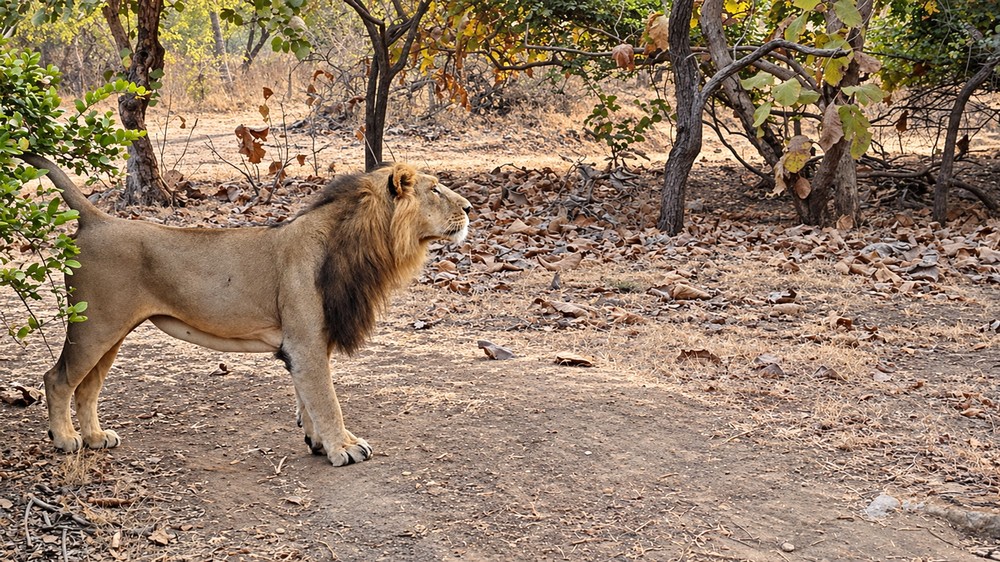
Africa has its lions, but the Asiatic lion lives in the wild in only one place on earth: Gir and the land around it. We saw them more than once.
At the first sighting I forgot every rule of the safari and screamed "babbar sher!" The lion looked straight at our jeep. The guide was not pleased. Between sightings, though, he taught us more about lion families than any documentary ever had.
Bhavnagar
Bhavnagar is where I come from. I had been before, but this time the house felt different. Ten days of seeing Gujarat as a visitor, and then a doorway where I didn't have to be one.
Back in Ahmedabad on the way out, we went to Law Garden, this time with a list, and shipped home what a suitcase can't hold: Navratri outfits, pickles, snacks, and a box or two more than planned.
A piece of home, sent home.

Shriram was right about this trip, and I don't mind saying it over and over again.

Saudamini Chandarana Bhat is a Chartered Accountant turned marketing leader. More about me